Showing posts with label Wine. Show all posts

Tuesday, July 31, 2012

What's in a Number? (Why We Should Ignore Wine Scores)


 It started out innocently enough. To make wine-purchasing easier for consumers and to give smaller wineries a chance to compete with the most revered vineyards, numerical rating systems for wine were developed some time during the mid-20th century. Previously, only tasting notes could be relied on to predict whether or not one might enjoy the contents of any particular bottle. To the American public, whose burgeoning interest in wine was just beginning, the flowery prose of wine literature could be intimidating and esoteric. The numerical system seemed to be the necessary antidote.

Several different scoring systems were developed, including the 0-20 scale, the 1-5 scale (using either numbers or stars), and Robert Parker's infamous 50-100 scale, all of which are still in use and vary by publication. Within each system, a certain number of points is allotted to each of several different categories: the color, the nose, the taste, the finish, and the overall impression. 
Wine rating systems

It all seems very logical and scientific. Where could the system go wrong? A major problem is that wine rating systems forget to take into account one very important factor: personal taste. Even the critics, who are trained to recognize wines that are technically well-made, often wildly disagree on scores. A 95-point wine in one publication may be a 79-point wine in another. Many things can potentially account for such a discrepancy--perhaps one of the reviewers was slightly under the weather the day he or she tasted the wine, maybe one of the bottles wasn't quite tasting right on the day it was sampled, or perhaps the wine being reviewed was a delicate Pinot Noir from Burgundy and one reviewer had spent the earlier part of the day sampling many powerhouse California Cabernets and had begun to suffer from palate fatigue (professional wine critics may taste hundreds of wines in one day!). Or maybe the two reviewers just have different taste in wine. 

Consumers will vary even more in their personal preferences--some love big, rich, tannic reds, while others prefer them soft, subtle, and aromatic. Neither is "right" or "wrong," but each will have very different opinions of, say, an Argentinian Malbec or a Poulsard from Jura. And just like opinions will differ from consumer to consumer, so too will they from consumer to critic. Of course, some people do find that their palates align consistently with that of a well-known critic, and in those cases, scores can sometimes be a reliable indicator of how much they might enjoy a particular wine. But the average person picking up a magazine and seeing a wine that has received a high rating from a critic with whom they are unfamiliar has no way of knowing if they personally can trust that critic. After all, if you love oaky, buttery California Chardonnay but the critic reviewing it does not, how can you expect an unbiased score? 
An example of a "shelf-talker"

The rise of the wine critic has created bigger problems than just consumer confusion at the wine shop. Many sommeliers and wine buyers will only purchase bottles that have received an arbitrary minimum score, for instance, 90 points (the perceived difference between an 89-point wine and a 90-wine is staggering and can make or break a wine). In wine shops, "shelf-talkers" are often displayed alongside the wines, allowing shoppers to read tasting notes and select wines based on their scores. A friend working in wine sales once told me that one of his accounts had tasted a wine and loved it, but refused to buy it unless he could find a 90+ score for it. They told him it did not matter which publication it came from--it could have been the local paper from a small town in Kansas, for all they cared, so long as they could post a score in the top decile. This, they knew, would sell the wine.

This type of buyer behavior has contributed to the oft-discussed "Parkerization" of wine. Robert M. Parker Jr., whose newsletter The Wine Advocate launched him to a level of influence perhaps higher than that of any other critic in any field, has a very particular palate. He loves wines that are low in acid and high in alcohol, body, oak, and concentration (which makes sense, considering the number of wines he would taste each day--only the biggest and boldest are likely to stand out). While there is nothing wrong with enjoying wines made in that style, his praise is so desired (and even necessary for financial success) that winemakers throughout the world have actually begun to shift their winemaking practices in order to create wines that will receive high scores from him. There is even a company that analyzes the chemical compounds in clients' wines to project the score each wine will receive from critics like Parker. Clients are then advised on the best way to complete the winemaking process in order to maximize scores. Sadly, these practices have led to a world in which many wines have lost their unique regional and varietal character in favor of an "international" style that is easy to sell. Plantings of indigenous grape varieties throughout the world have unfortunately been ripped out in favor of more marketable grapes like Cabernet Sauvignon, Merlot, and Chardonnay.
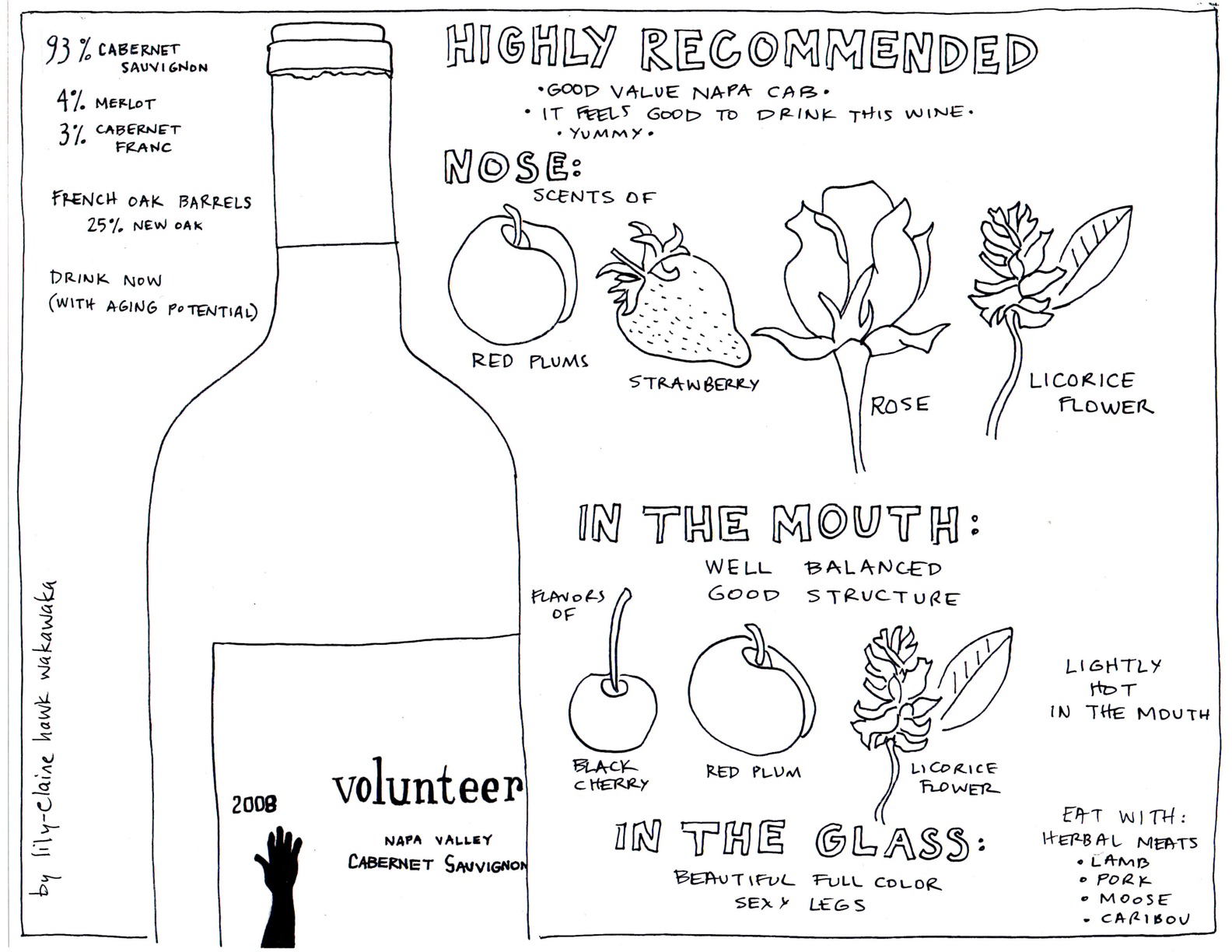
Some helpful tasting notes
Without scores, how can non-expert wine-drinkers be expected to navigate wine shops and lists to successful determine which wines they might enjoy? It's actually easier than one might think. It helps to have a minimal wine vocabulary so you can describe what you like. Think of the wines you have enjoyed in the past. Do you like them to have a lighter body (think about the texture of water in your mouth) or a fuller body (more like whole milk)? Do you prefer them to be completely dry, or do you like a little bit of sweetness? Would you rather your wine have bold, ripe flavors of fresh fruit, or a smoky, earthy aroma? If you find yourself struggling to answer these questions, start at a trusted wine bar (like The Barrel Room!) and tell your server you are interested in trying different styles of wine to determine your preferences. They will likely accommodate you and let you experiment with different ends of the spectrum. Keep track of the words that are consistently used to describe the wines you like (and the ones you don't like--this can be useful to know as well). The next time you are in a wine shop, bar, or restaurant, you will have the vocabulary to explain what you are looking for. Engaging in a discussion with a person who is familiar with the wine selection is far more useful than reading stagnant words on a piece of paper--they can ask you questions about your preferences to determine if a wine is truly a good match for your palate. Ideally, if the sales person or sommelier makes a good recommendation, you know you can trust them again in the future.

If you know the words that signify the wines you like, wine reviews can be helpful as well--just ignore the scores. The words in wine reviews are much more reliable (and slightly less subjective) indicators of what is inside the bottle. Levels of tannin and acidity will be indicated, and flavors will be described. I personally know that I dislike anything with flavors of raisin, so I can safely skip over wines whose reviews mention that dreaded dried grape flavor. On the other hand, I consistently enjoy wines with aromas that are described as "mineral" or "herbal," so those words give me the go-ahead to buy. 

The cereal aisle: more intimidating than the wine section?
The numerical rating system is too precise a method for evaluating such an imprecise, subjective matter. A wine shop can be overwhelming with all of the choices available, but so can the cereal aisle at the grocery store or the toothpaste section at Walgreen's--and you would never think to consult a stranger who knows nothing about your personal taste to help you decide between Lucky Charms and Frosted Flakes. There are many better ways to choose a cereal, and similarly, a wine. 

-Nikki

Wednesday, June 13, 2012

sherry, spain's little-known treasure


 "If penicillin can cure those that are ill, Spanish sherry can bring the dead back to life." - Sir Alexander Fleming 

"So fine, varied and noble a wine is sherry - and so intriguingly complicated is it to make..." - Jancis Robinson


Sherry is a fascinating wine with a rich and colorful history. Luckily for us the Sherry wine styles haven’t changed much over their 3,000 years of production, allowing us the opportunity to explore an ancient wine untouched by modernization.


the Sherry triangle


The “Sherry triangle” consists of three cities in the southwest of Spain: Jerez de la Frontera (from which Sherry derives its name), Sanlúcar de Barrameda, and El Puerto de Santa María. This area has been making wine since a Canaanite tribe, the Phoenicians, brought grapes here from the Ancient Middle East in 1100 BC. Later the Moors introduced alembic distillation to the region, creating a precursor to brandy.  Spanish and Portuguese explorers during the Age of Exploration loaded up their ships with Sherry in order to have the comfort of wine while traveling far from home. Sherry was likely the first wine that came to the New World aboard explorers’ ships. The English love for “Sherris sack” (literally translated from “Jerez saca” as “extracted wine from Jerez”) began with Sir Francis Drake’s raid on the Spanish Armada in Cadiz during which he captured many barrels of the coveted wine and brought them home; William Shakespeare’s Sir John Falstaff has been famously quoted as saying “If I had a thousand sons, the first humane principle I would teach them should be, to forswear thin potations and to addict themselves to sack.”


Sherry clearly has quite a history. This story would never have come about, however, were it not for the unique soil in the Sherry triangle and the two crucial winds that blow across it. 

Albariza is a fine white chalky soil composed mainly of miniscule fossilized sea creatures. This powdery mixture absorbs water like a sponge and dries like cement. Introduce the hot, dry levante wind blowing from the east and you get a perfect situation for the unlikely vineyards in the region: moist soil providing water to the roots of the vines, kept in place by a blow-dried hard crust on top. Another wind, the humid poniente, blows from the west providing additional moisture that becomes trapped in the soil little by little. This presence of groundwater and a bit of humidity allows the vines to grow healthy grape bunches, and lets ambient yeasts that will later form flor ensconce themselves on the skins of the Pedro Ximénez, Palomino, and Moscatel grapes growing in the Sherry triangle. 

Palomino vines in albariza

Now for the winemaking. After the grapes are harvested and fermented, the desired Sherry style is determined. If the wine is destined to become a crisp, pale Fino (or Manzanilla, which is a very light Fino made only in Sanlúcar de Barrameda), brandy is added to raise the alcohol level to around 15%. If it is made in the Oloroso or Amontillado style, alcohol is added until the wine reaches 18%. This very important distinction determines the style of the Sherry. 

a Sherry cask with flor

Finos have a low enough alcohol content such that a special native yeast that forms a film known as flor can survive in it and grow into a protective layer on top of the wine. Finos then begin aging “biologically” as tiny amounts of oxygen seep through the layer and the yeasts in the film slowly convert the acid and sugar in the wine. Biological aging increases acetaldehydes in the wine, producing the characteristic bite Fino is known to have. 

an Oloroso, Amontillado, and Fino, left to right

Amontillados and Olorosos have too high an alcohol content to support the film of flor for long. The layer dissipates, leaving the wine exposed to oxygen. This darkens the color and gives a nutty flavor to these Sherries. Palo Cortados are a very interesting hybrid of the two styles which originally start off as Finos until the flor dies off (intentionally or accidentally), after which oxidative aging occurs. These wines have the bite and salinity of Finos and the complex nuttiness of Olorosos.


Sherry wines are aged in a complex system called a solera. This is a process of fractional blending which mixes wines from each new vintage with wines from all previous vintages. The aging process is sped up by blending; Sherry derives its unique style partially from this process.

a drawing of a solera system

Sherry is often misunderstood in the international wine market. This is largely due to the many imposters, including that bottle labeled "Sherry" you can find in the supermarket... that bottle, in fact, typically does not even contain wine. It often is a mix of distilled cheap alcohol and artificial coloring. Also, the many confusing styles of Sherry are intimidating to would-be consumers. But hopefully a little clarification of Sherry will pique interest in this ancient wine. 


If you’d like to have a taste of these delicious wines, sample a few with a flight (our Sherry flight can be seen on our menu at The Barrel Room here) and delve into the traditional and generally unappreciated world of Sherry!

-    - Sarah

Monday, June 11, 2012

only excellent: the story of the wines of the finger lakes


"Only Excellent. Good Wine is not good enough for humans - only excellent will do."--Dr. Konstantin Frank


Dr. Konstantin Frank

Once upon a time, the wines of the Finger Lakes region of upstate New York were little more than boozy grape juice, and those who produced them had resigned themselves to mediocrity. Believing that it was simply too cold in the region to grow quality, vitis vinifera grapes, winemakers of the region had long relied on the simple, sugary wines made from cold-hardy native American and French hybrid grapes like Concord and Catawba. It would take the persistence and dedication of a maverick mad scientist to turn the Finger Lakes into the impressive wine-producing region it is today.

In 1951, the prayers of those who desired great wine were answered with the arrival of Dr. Konstantin Frank, a 54-year-old Ukrainian immigrant, to the region. Although in the old country Dr. Frank had been a respected viticulturist, English was not one of the nine languages he spoke, so in New York he was forced to take a low-level, menial labor job at the Geneva Research Station, a grape research facility at Cornell University. Once he had found his in, Dr. Frank immediately began urging the local winemakers to experiment with planting vinifera grape varieties. He explained that his thesis at the Odessa Polytechnic Institute had been on techniques for growing vitis vinifera in a cold climate, and that if it could be done in the below-freezing winters of Ukraine, it could certainly be done in slightly milder New York. 

Winter in the Finger Lakes


As most mad scientists are at first, Dr. Frank was ridiculed by the local winemaking community. His idea that the failure of vinifera wines in the region was due not to icy temperatures but to the lack of proper rootstock was viewed as ludicrous (although admittedly, he may have hurt his case by telling women who drank labrusca wines that they would be unable to get pregnant as a result). The ornery Ukrainian viticulturist, however, refused to give up. After much perseverance, he finally was able to convince local sparkling wine producer Charles Fournier to give him a chance. Together, they planted thousands of Chardonnay and Riesling vines grafted onto hardy rootstock in Quebec, Canada, and then waited patiently until 1957, when the vines proved Dr. Frank's hypothesis to be correct. 

Shortly thereafter, Dr. Frank founded Vinifera Wine Cellars, which will celebrate its 50th anniversary next month, in Hammondsport, New York. The first vintage, a trockenbeerenauslese Riesling, was released in 1962, and upon tasting the success for themselves, other winemakers sheepishly began to follow suit. The Finger Lakes region is now home to more than 100 wineries producing wines made from vinifera grapes, the best of which are often bone dry, aromatic Rieslings, although great success has been had with Pinot Noir, Cabernet Franc, Chardonnay, and Gewürztraminer as well. More recently, experimentation with Austrian varieties such as Blaufrankisch and Grüner Veltliner has led to pleasing results. 


Keuka Lake in Autumn


In addition to Dr. Frank's Vinifera Wine Cellars, now run by Konstantin's grandson Frederick Frank and still producing some of the best wines in the state, top Finger Lakes producers include Sheldrake Point, Red Tail Ridge, Ravines, Hermann J. Wiemer, and Hearts & Hands. These wines are still sorely under-appreciated in the national marketplace, which makes them a little hard to find on the West Coast, but luckily a few of them are available at The Barrel Room. We have Sheldrake Point's fantastic 2007 Reserve Riesling by the bottle, as well as their delightfully aromatic and spicy 2010 Gewürztraminer by the glass. Also available by the bottle is Red Tail Ridge's earthy and unusual 2008 Lemberger (a synonym for Blaufrankisch). If you haven't tried the wines of the Finger Lakes, you are missing out. But if you, like us, have tried them and loved them, then you can thank Dr. Konstantin Frank. 


-Nikki

Friday, June 8, 2012

summer: 'tis the season for rosé

summer: ‘tis the season for rosé!


There's nothing more refreshing and appropriate for summer time than a cool glass of rosé. We have several delicious rosés in all hues of pink, still, sparkling, by the bottle and by the glass here at the Barrel Room.  

Contrary to popular belief, rosé wine is not made by mixing red and white wines (with the exception of rosé Champagne, but I’ll get to that later).  Although some regions allow some white grapes in rosé wine, it is produced primarily from light skin contact with red grapes.

Rosé is made in a wide range of colors, from a pale salmon to a dark fuchsia. This depends on the grapes used and the wine making techniques.

The best known rosés hail from southern France, particularly Provence.  When I visited Provence, rosé was most definitely the wine of choice on those sweltering Provençal summer days. At their best, rosés are vivacious, full of fruit, soft and aromatic, yet crisp on the finish. 


We have a fantastic Provençal rosé by the glass from Domaine Le Galantin in Bandol, where Mouvèdre is the primary varietal along with smaller amounts of Grenache and Cinsaut. The French style rosé, particularly the Provençal style tends to be a lighter in color, requiring very short skin contact. 

One of the most sought after Champagnes is rosé Champagne. This is one of the few circumstances in rosé production where a small amount of still Pinot Noir is added to a white Champagne cuvée to create a consistent colored rosé from vintage to vintage. One example currently featured by the bottle here at the Barrel Room is the Mansard Brut Rosé, which is a darker pink color that’s bright and fresh with aromas of strawberries and raspberries.

The popularity and awareness of rosé has risen in the U.S. in recent years. Perhaps all those white zin and blush poo-pooers have discovered that not all pink wines are created equal.  Rosé is different. It has been proven that pink wine can be light, crisp and refreshing, not just a cloyingly sweet, cheap wine that comes out of a box. Next time you’re looking for a light refreshing white, try a rosé instead. You might be pleasantly surprised. 

*Rosé wines currently available at the Barrel Room
Stop by and see us for great conversation about any wine on our list and try our  Raventós i Blanc Cava Rosado Brut (sparkling) or Bandol Rosé by the glass. Or invite a friend and try a bottle of the Pinot Noir based J.K. Carriere ‘Glass’ Rosé from Oregon or our refreshing Corsican Patromonio Rosé.

Cheers! 
Carolyn


Tuesday, June 5, 2012

demystifying chardonnay

 
It’s very common to hear a customer in a restaurant or wine bar saying, “I’ll just have a glass of the Chardonnay.” If the customer is American, odds are this means they want a big, buttery, oaky California Chardonnay. If the customer is European, a Chablis with its laser precision, crisp stone fruits, and minerality may be what she is requesting. That these two opposing wine styles are created by the same grape lends to the mystery of Chardonnay: no white wine grape seems to be better known but less understood.


Unraveling the styles of Chardonnay today requires a bit of understanding of the origins of this prolific grape. This classic Vitis vinifera variety traces its roots back to eastern France (perhaps in the town of Chardonnay in the Mâconnais, whose name translates in Latin to “a place of thistles”), where it came about due to a natural cross-pollination between Pinot Noir and the ancient, nearly extinct Gouais Blanc. Pinot Noir likely evolved from wild Vitis sylvestris vines in the region around modern-day Burgundy. Gouais Blanc is thought to have originated somewhere in the Balkans; the emporer Probus of Dalmatia is said to have brought the grape to Gaul in the 3rd century. In the eastern French countryside peasants made a simple quaffing wine with Gouais Blanc. Given time and proximity, the crossing of Pinot and Gouais Blanc was inevitable. These two parent grapes gave rise not only to Chardonnay, but to many other grape varietals used for making wine in France today, such as Auxerrois, Jacquere, Romorantin, Gamay, Riesling, and Colombard. Chardonnay proved to be very vigorous and easy to cultivate, adapting to almost all soil types and climates, so it soon gained quite a presence in the area.


The Cistercian Abbey of Pontigny


Prior to the founding of the Abbey of Cîteaux in 1098 by the Cistercians, many grapes grew all over the limestone escarpments of the Côte d’Or and the chalky soils of Chablis. The Cistercians, however, noticed differences between parcels of land and the resulting expression of terroir through the wines they produced; this expression was, to them, clearly a message from God and needed to be cultivated and understood. Thus the monks needed grapes that served as blank canvases, allowing the goût de terroir to be easily demonstrated through wine production… grapes which were never to be blended lest God’s message became muddled.
The Chardonnay grape was an obvious candidate for a white grape. It has relatively neutral characteristics when made into an unmanipulated wine. Simple and pure aromas of stone fruits and citrus, medium to full body, medium acidity, medium alcohol percentage. This middle-of-the-road nature allows it to be superbly terroir-expressive. The Cistercian monks adopted Chardonnay readily and purportedly planted it in Chablis at Pontigny Abbey in the 12th century, from which it spread to the rest of Burgundy.

Given this origin of Chardonnay in Chablis, and the heavy reliance in general on tradition in Burgundy, it comes as no surprise that the wine style there leans toward the pure, unadulterated Chardonnay we expect from the region. The most traditional producers use very little oak and tend not to put their wines through malolactic fermentation at all. This generates a highly acidic wine notorious for its perfect pairing with oysters. Currently there is a division in Chablis between the traditionalists, who espouse maintaining the “Chablis style” by avoiding oak entirely, and the modernists, who embrace oak barrel aging claiming the result is a better, more marketable wine.


Chardonnay growing regions in the world, courtesy of The Wine Wise Company.


Chateau Montelena
From Chablis, Chardonnay spread to almost every winemaking region in the world. Many styles have emerged, but arguably none has gained such fame and opposed so distinctly the Chablis style as California Chardonnay.


In 1882, Charles Wetmore, President of the California State Viticultural Commission, brought clippings from Meursault to his winery La Cresta Blanca in Livermore Valley. Much of these vines were ripped up, however, during Prohibition, but some were secretly saved. Ernest Wente of Wente Vineyards planted some of the salvaged vines post-Prohibition in the 1940’s along with a few other clones. Eventually Chardonnay was being made in a Burgundian style in many vineyards. In 1976, Napa’s Chateau Montelena and Chalone validated California as a serious player in the world of Chardonnay with a victory over Burgundies at the influential blind tasting known as the Judgment of Paris. By 2005 nearly 25% of the world’s 400,000 acres of Chardonnay plantings were located in the state of California. These three decades saw a significant metamorphosis of style, from the pure expression of fruit of the initial 1970’s Chardonnays to the butter-bomb style we all know and love (or hate), evolving in the late 1980’s.


Why this style developed is a topic of debate. Some say the buttery Chardonnays came about as a response to the US pasta craze which hit the country 25 years ago: menus began featuring creamy pasta sauces that paired nicely with a big, round, buttery Chardonnay. Others attribute it to the import of French oak barrels in an attempt to mimic the Burgundian style. These barrels were bought new, of course, and because the winemakers needed to use them immediately they inadvertently doused their Chardonnay with brand new oak. In addition, the higher degree of grape ripeness achieved here in California produced a wine that could withstand more manipulation, and winemakers clambered to experiment with oak and malolactic fermentation to see what would happen to this new type of Chardonnay wine.

Regardless of the reasons why, these two opposing styles of Chardonnay exist in the wine world and are often referred to as “old-world” versus “new world.” Which suits you best is determined solely by your own palate. If you’d like to indulge in a bit of experimentation with Chardonnay, click here to view our flights and comparisons, and pay particular attention to the Old-World versus New-World comparison (for a comparison of styles), and the French Chardonnay Family flight (to experience French Chardonnay and its siblings, Jacquere and Romorantin).

Salut!

- Sarah