Wednesday, July 25, 2012

Dispelling the Sulfite Myth: The Truth About Red Wine Headaches


“I only drink white wine… red wine gives me headaches. It’s because I’m allergic to sulfites,” a woman told me two nights ago, with a very matter-of-fact tone. When pressed further, she alluded to more detailed information about her allergy: “I usually stick to Chardonnays from California. The French wines always give me headaches. I try to drink organic wines whenever I can… they don’t have sulfites.”
 
the suspicion-arousing phrase...

I have heard misinformed declarations such as the one above more times than I could ever count. Sulfites are one of the most misunderstood substances in the wine world. Hopefully I can shed a little light on this subject below, and offer some potential solutions to those who suffer from the dreaded RWH, or Red Wine Headaches.

First of all, sulfites should be clarified. Sulfites are any compounds containing the sulfite anion, SO32-. These include metabisulfites, which are used in the wine industry in the form of a white crystalline powder that is added to grape must and fermented wine to prevent the growth of wild microorganisms, thus increasing the stability of the wine. As a food additive, potassium metabisulfite (called E224) can be found in frozen shellfish, jams, pickles, molasses, cereals, tomato paste, most condiments, dried fruits, and fruit juices including bottled lime and lemon juice, among many other products. 
these have more sulfites than your glass of red wine!
Next, let’s talk about a few myths regarding sulfites in wine. 1) Organic is the way to go to avoid sulfites, right? Unfortunately for those trying to stay away from sulfite compounds, organic simply means “no sulfites added.” Sulfites are natural byproducts of fermentation produced by yeasts, and many organic wines contain more than 10 ppm (the limit for the required “contains sulfites” warning to be placed on a bottle of wine).  2) Don’t red wines have more sulfites than whites? Sorry again, but white wines typically contain much higher levels of sulfites. So if you find that drinking white wine allows you to consume without negative reactions, you’re wrongfully convicting sulfites as the antagonists. 3) French wines contain more sulfites that Californian wines (or vice versa according to some)… again, wrong. Wines all over the world contain sulfites. Given a range of wines from many different countries, the average sulfite content is 80 ppm, with variations depending on the producer, not the region from which the wine comes.

no sulfites "detectable"
On an important side note, “sulfite allergies” are not true allergies, but are in fact sensitivities. Allergies can only occur after exposure to allergenic proteins, which sulfites are not. People with sulfite sensitivity will experience discomfort, and sometimes very extreme reactions, if they consume any product containing certain levels of sulfites. Headaches? Absolutely not… "Sulfites can cause allergy and asthma symptoms, but they don't cause headaches," says Frederick Freitag, associate director of the Diamond Headache Clinic in Chicago and a board member of the National Headache Foundation. Sulfite sensitivity causes breathing difficulty, congestion, and at the more extreme end, anaphylaxis in the severely sensitive. Asthmatics are particularly at risk. About 4% of the population of the United States is sulfite-sensitive.

So what, then, causes the headaches many pin on red wine consumption? This is the topic of much debate, but research has indicated a few likely suspects.


Headache Suspect #1: Tannins.

tannins can be found in a wide variety of substances, including wine and tea
Tannins are plant polyphenols found in grape skins, grape seeds, stems, and wood used to make barrels in which wine is often fermented and/or aged. They are the compounds that give the mouth-drying sensation in many red wines. Tannins are natural preservatives which prevent oxidation, and they are a major component of the sediment you’ll find at the bottom of an aged red. They are found in much higher concentration in red wines than whites, though some white grapes such as Sauvignon Blanc and Viognier contain a non-negligable amount. 

Tannins can bind to starches during digestion which are needed for serotonin production. For those who are sensitive to tannins, the subsequent reduction in serotonin levels can lead to migraines. If this is what happens to you when you drink red wine, oversteep some black tea and drink it… if you get a headache, odds are you’re sensitive to tannins. Stick to white wines that do not come into contact with oak. You’ll find you have many options!


Headache Suspect #2: Histamines.

Histamines are organic nitrogen compounds that are typically produced by the human body as an immune response to foreign pathogens. In wine it is produced by yeasts during fermentation, and since it is also found in grape skins, red wines that have extended skin contact during vinification will naturally be much higher in histamine contact (red wines contain 20-200% more histamine than whites). 

For those who are allergic to histamines, the combination of alcohol and histamines found in red wines may be linked to headaches. If you have severe reactions to insect bites or bee stings you might be in this group of unfortunates. Take some loratadine (Claritin) an hour before you drink red wine and see if your headache problem is eliminated… if so, you’ve found the solution! Also, drinking whites, sparkling wines, or very light rosés like those from Provence may be advised.


Headache Suspect #3: Prostaglandins

Prostaglandins are lipid compounds found throughout the human body. They act as mediators and do many important functions in animal bodies, but the one function we are most concerned with here is the regulation of contraction and relaxation of smooth muscle cells, such as those found in the walls of blood vessels. Wine contains enzymes which can suppress the functionality of these compounds, leading to unbalanced vasodilation and vasoconstriction. This can produce headaches. New studies have found that some yeasts produce prostaglandins as well, and the presence of alcohol may increase the levels produced and therefore worsen the situation.

Luckily we have prostaglandin inhibitors available in our local supermarkets and pharmacies: Ibuprofen, Advil, Tylenol, or Aspirin! Take some half an hour before you drink wine and you just might cure your headache problem.


Headache Suspect #4: Tyramine.

Tyramine is produced naturally in fermented, aged, and spoiled foods and beverages. It is a side effect of the breakdown of proteins over time. Aged cheeses, dried fruits, sauerkraut, and soy are among the products extremely high in tyramine. And so is wine. 

avoid this pairing at all costs if you're tyramine-sensitive!
If tyramine is ingested by those who are sensitive to it, a “hypertensive crisis” may result (a fancy name for elevated blood pressure). Extreme cases can be very dangerous; less severe reactions which occur in the majority of sensitive people include headaches. As Dr. Lynn Gretkowski told The Wine Spectator (May 31, 2009), “Tyramine is thought to be a vasoactive substance that causes the dilation and contraction of blood vessels - the squeezing and relaxation component of headaches.” If you think you’re tyramine sensitive, try eating some Stilton and see if you get your red wine headaches. How to avoid these? Again, Take some Aspirin or Ibuprofen half an hour before you drink your wine, and you should be headache-free (unless, of course, you drink too much!).


The bad news is that there are many potential causes for RWH. The good news is that there are ways around each one, and there are methods to test your particular affliction.

And finally, a reiteration: sulfites do not cause red wine headaches. You may be sulfite sensitive, but if you are, you should be much more concerned by toast with jam, a handful of dried apricots, or fries with ketchup than by a glass of Cabernet!

- Sarah

Tuesday, July 24, 2012

How much do we need to know about wine in order to enjoy it?

you don't need to be "that guy" in order to enjoy wine!


As anyone with even a mild interest in fermented grape juice is aware, there are many misconceptions that people have about wine--for example, that all wines bottled under screwcap are cheap, that "dry" means the same thing as "tannic," or that sulfites in wine cause headaches (look for all of these myths to be debunked in future blog posts!). But one of the most harmful misconceptions out there is that you need to be knowledgeable about wine in order to enjoy it. This belief has caused many people to eschew wine in favor of beverages like beer or vodka, which they feel they have permission to imbibe without having to think about it too much. "Winophobics" fear that they will not be able to appreciate the often expensive beverage without being well-versed in its nuances, or that there will be some sort of exam that they will fail and embarrass themselves in front of the sommelier or a snooty colleague. 


A few years ago, I asked a beer-loving friend if she wanted to accompany me to a Friday evening wine tasting at Alphabet City Wine Co. in New York, a fun and laid-back store with friendly and knowledgeable staff and a great wine selection. She looked as if I had just asked her to help me give my great-grandfather a sponge bath. 


"But--I wouldn't know what to say about the wines!" she stammered, a look of panic flashing across her face. 


Confused, I replied, "do you think they're going to quiz you on the wines or something? You don't need to say anything about them. You just drink them. It's fun."


We ended up skipping the tasting and going out for beers instead, but since that conversation I have often thought about the peculiar link between wine enjoyment and knowledge. There is no other food or beverage that I can think of that people feel they actually cannot enjoy without knowing a lot about it. Sure, there is plenty to learn about cheese, mushrooms, or even whiskey, that may make their consumption somewhat more enjoyable, but, personal taste aside, I have never seen anyone refuse the chance to try any of those things based on a lack of sufficient understanding thereof. 


The fact of the matter is, unless you are trying to become a wine professional, all you really need to know is whether or not a wine tastes good to you personally. Sure, it can be fun to learn more, especially when you find a region or grape variety that you particularly enjoy. But this can only enhance cognitive pleasure, not sensory pleasure. That is to say, recognizing that the mysterious liquid you just sipped is a Burgundy from the 2006 vintage will give you the same satisfaction as acing a difficult question on a math test, but it will not make the wine taste any better.


Conversely, knowledge of wine can sometimes actually reduce your enjoyment of the beverage. Having too much information about a particular wine--for example, that the producer has an excellent reputation, that it came from a superior vintage, or that someone like Robert Parker gave it 100 points--may cause you to set your expectations of quality too high. It's kind of like finally going to see a movie after hearing rave reviews for months--very few can live up to that kind of buildup. 


Last year, Sarah and I were at a restaurant that is well-known for its excellent wine selection. The bartender had overheard enough of our conversation to know that we are total wine nerds, and generously began to pour us blind tastes of every bottle he had open. When I sipped one of them, I felt as if I had reached some sort of enlightenment. I suddenly understood the reason for all of the pomp and circumstance surrounding wine. I turned to Sarah, and managed to utter a short, staccato sentence: "This. Is. The best. Wine. I have ever. Tasted."


Smirking, the bartender interjected, "don't drink that too fast. It's DRC."


This was one of those record-scratch moments for me. For the uninitiated, DRC stands for Domaine de la Romanée-Conti, the Burgundy estate considered to be one of the best (and certainly the most expensive) wine producers on the planet. I had always longed to try one of their wines, but believed my lack of sufficient income would be an insurmountable roadblock.  I was thrilled to discover that, independently of its reputation, I thoroughly enjoyed such a highly sought-after wine. Sarah, however, had not yet had a chance to taste it before the revelation was made. She took a sip.


"I mean, it's good," she shrugged, "but it's not amazing." We will never know for sure, but I suspect if it had been Sarah who had taken the first sip, our evaluations might have been reversed. 


Psychology can have a massive impact on the way we experience wine. There have been many experiments where wine professionals have been swayed in their evaluations of wine by subtle psychological cues. In 2001, University of Bordeaux researcher Frédéric Brochet conducted two revealing experiments that are often recalled today when discussing the subjectivity of wine. In the first one, fifty-seven wine professionals were asked to evaluate two glasses of wine--one white and one red. The experts marveled at the "jamminess" and "crushed red fruit" of the latter, completely unaware that both glasses contained the same white wine, one of which had been tinted with red food coloring. Not one of them noticed this. 


In the second experiment, an average-quality Bordeaux wine was poured into two different bottles--one a high-end, well-respected Grand Cru, and the other just a regular vin de table. I'm sure you can guess how the ratings differed between the two wines! The "Grand Cru" was heralded as being “agreeable, woody, complex, balanced and rounded,” while the "vin de table" was derided as “weak, short, light, flat and faulty." 


We like to play these tricks with people as well (but don't worry, we will always come clean immediately after!). If you tell us you hate Merlot but love Cabernet Sauvignon, there's a good chance we will pour you a small taste of Merlot and say "try this Cab!" We don't do it to be cruel, but rather to help you free your mind from the prejudices you may have developed from listening to other people talk about wine. If you aren't sure what wine you would like to try and I pour you a taste, I generally won't tell you what it is until after you've formed your thoughts on it. Your opinion should not be influenced by where it's from or who made it. By paying attention to our own tastebuds rather than our highly suggestible brains, we can become more comfortable with the idea of tasting wine.


-Nikki


Note: if this subject interests you and you would like to read some thought-provoking discussion about it, I highly recommend the book Questions of Taste: The Philosophy of Wine. It is by no means a light read, but it's fascinating! 

Saturday, July 21, 2012

Le Nez du Vin


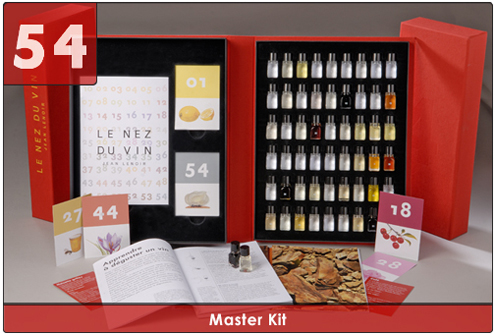
It felt like Christmas on Thursday at the Barrel Room.  We received a Le Nez du Vin master kit along with a wine faults kit and a New Oak kit. What a tremendous surprise and wonderful follow up to Nikki’s post on Monday. The giver still remains a mystery…


We had a blast opening the tiny bottles and guessing what smell was what.  The master set contains a plethora of smells like violet, butter, vanilla, melon, walnut.  Some of these smells are scents I have experienced in wine, that I couldn’t identify previously.  This is a tremendous addition to the bar and I look forward to developing my sense of smell in my free time, sharing our new smelly bottles with guests and sharing smelling revelations on the blog. 

Thank you to our mysterious benefactor!
-Carolyn

Monday, July 16, 2012

How Do They Get the Blueberries into the Wine?: A primer on wine aromas


Wine tasting is very serious business
I poured two tastes of Petite Sirah, and then stood back and watched as the two women in front of me swirled their glasses and inhaled deeply. 


"It smells fruity," one of them said.

"Yes," replied her friend, "sort of like blueberries!"

"Exactly," I responded. "Blueberry is a very common aroma in Petite Sirah."

The women smiled with satisfaction, pondering the wine as they sniffed and sipped. But then the first woman's face contorted in confusion. "Wait a second..." she began, "how do they get the blueberries into the wine?!"


To the novice wine drinker, this can be an extremely confusing concept. Sometimes a wine has such a pronounced smell of blueberries, or of roses, or of ripe fresh peaches, that it seems impossible that the scent could have been achieved in any other manner than by tossing a bag of groceries in with the fermenting grapes. But unless you are making blueberry wine, peach wine, or rose wine (all of which do exist), the only fruit that will ever see the inside of the oak barrel or stainless steel fermenting tank is in fact, the grape.

So how do wines made from little more than fermented grapes and yeast end up smelling like, well, anything but? And what makes each wine different? There are a number of factors that contribute to the aroma (or the bouquet--more on that later) of a wine. 

One of the most important determinants of a wine's aroma is the type of grape(s) from which it is made. Each grape contains tiny amounts of aromatic and phenolic compounds--chemical compounds with very unromantic names like methoxypyrazine, which gives Cabernet Sauvignon and Sauvignon Blanc their characteristic grassy aromas, or zingerone, the vaguely onomatopoeic moniker for the compound responsible for spiciness (zing!) in Syrah. Monoterpenes, a class of compounds including linalool and geraniol, lend a floral quality to Gewürztraminer, Muscat, and Riesling. If you were to pick a ripe grape off of the vine and eat it, you may have a hard time perceiving any of these chemical compounds. Fermentation, however, has a magnifying effect on their aromas, and they are often clearly perceptible in the finished product. 
Then there is the "bouquet"--a somewhat controversial and mostly unnecessary term that, depending on who you ask, either means the aromas that come from the winemaking process or the aromas that come from aging. Between you and me, I'm fine with calling them all aromas. Or scents. Or smells. Whatever works for you. But although the term doesn't matter, these two processes have an undeniable effect on the way a wine smells. A winemaker can choose to age a wine in stainless steel barrels, preserving the purity of the fruit aromas, or in oak barrels, which (depending on their age and region of origin) can impart hints of toast, cedar, vanilla, or coconut. The decision to allow a white wine such as Chardonnay to undergo malolactic fermentation can result in a scent not unlike buttered popcorn, due to the conversion of crisp, tart malic acid (think green apples) to soft lactic acid (think yogurt). Allowing a wine to sit with the dead yeast cells (lees) following fermentation will lead to a yeasty, brioche-like smell. An aging wine will see its fresh fruit aromas turn to those of dried, cooked, or baked fruit, while other earthy, floral, mineral, or even animal aromas develop as well. The scent of the wine will become much more layered and complex as it matures, although if you let it mature for too long, its aroma will turn to that of a nice vinegar for cooking.

Oak barrel aging can lead to toasty, woody, and vanilla flavors in the finished wine
Of course, despite the fact that there is some science behind all this, that doesn't mean everyone is going to perceive the same thing all of the time, or even half of the time. Everyone's nose and palate is different, and we all have different thresholds of perception. Personally, I can almost never detect the smell of mint in a wine until someone else points it out, but I am always among the first to pick up on the smell of plum. Some people can instantly discern that a wine that has been ever-so-slightly damaged by cork taint, while others may happily gulp down the entire bottle without batting an eye. This doesn't mean anyone is "wrong," any more than one would be "wrong" for preferring vanilla ice cream to chocolate.

the aroma wheel
If you want to get better at this wine-sniffing thing, you have options. A very useful tool is the aroma wheel, the creation of Ann C. Noble, a sensory chemist and former U.C. Davis professor. You can buy one for $6, and use it to identify scents by narrowing them down from the general (fruity) to the sort-of-general (berry) to the specific (strawberry), helping to make the process a little less daunting. Another suggestion, courtesy of my former Intro to Wines professor, is to learn what things smell like. It's pretty simple. Go to the farmers' market or a spice shop, pick things up, and sniff them. Commit their scents to memory. If you don't know what gooseberries smell like, find some gooseberries in the produce aisle and take a big whiff. Of course, if anyone sees you do this, you might have to buy them. Or, if you have lots of money and cannot figure out what to do with it, spend some of it on an aroma kit like Le Nez du Vin, which basically lets you do all of that without the awkward trip to the grocery store. 
Le Nez du Vin aroma kit
At the end of the day, the most important thing to do while drinking a wine is to enjoy it, not to try to think of obtuse flowery descriptions (unless, of course, you are a wine reviewer). But identifying aromatic characteristics can be fun, especially with a group of friends. And the more you drink, the more creative your descriptions will become (some excerpts from my tasting group's late-night notes: 'kinda like a burrito,' 'Aunt Jemima maple syrup,' 'third grade snack time with apple juice and graham crackers' and 'Pert Plus shampoo - green apple scent.' Don't take yourself too seriously. And remember, practice makes perfect. 

-Nikki

Friday, July 13, 2012

Wine & Food Pairing 101


To some, pairing the right wine with a meal is daunting task, something that is to be left to sommeliers.  However, it’s much simpler and more intuitive than most people think.  As someone who loves cooking and drinking wine, food and wine pairings are always exciting to me.  I often buy a bottle of wine and plan a whole meal around it.  I’m always looking for a new and interesting pairing. 

There are several approaches to pairing wine with food, one which resonates with me is the concept of terroir and geography, or taking a regional approach to pairing.  “If it grows together, it goes together”: a common mantra of chefs and sommeliers.  Throughout the major wine producing countries of the world there is a wealth of different cuisines.  In France, for example, there are several regions, all of which produce their own specialty dishes and all of which make wines that fit in perfectly with the regional cuisine.  This is where many of the classic pairings originate. 

Highlighting a few regional pairings in France:
Burgundy is known for beef bourguignon which pairs well with a red Burgundy.  Buttery escargot go perfectly with a white Burgundy. From the Southwest, try a rich cassoulet with Malbec-based Cahors. Loire valley is famous for its chèvre (goat cheese), which pairs fantastically with a crisp Sancerre or Pouilly Fumé.
A typical cheese offering after a meal in France
Which brings me to cheese and wine pairings, which can sometimes be tricky.  Because of their buttery and nutty nature I usually find that sheep's milk cheeses are well paired with most wines.  At the other end of the spectrum blue cheeses can be more challenging.  I will always suggest a blue cheese with a dessert wine like Sauternes or an aged port. A juicy, zippy Zinfandel would also pair well with blue cheese. 

There are plenty of more challenging cuisines without the historical wine culture to refer to.  One of my favorite pairings with South and Southeast Asian food, for example, is a German kabinett or spätlese Riesling.  The refreshing, light sweetness and bracing acidity of Riesling cuts right through the spiciness and varied flavors of these regions, and balances beautifully! 


When I'm out to dinner, I rarely pass up a chef's tasting menu complete with wine pairings to experience the collaboration of sommelier and chef, and perhaps taste a different perspective on wine and food pairings. Experimenting with different foods and wines is fun and a great way to teach yourself how different flavor profiles do or don’t work well together. You may find the occasional terrible match but if you follow your palate you’ll be sure to find a great pairing. Don’t be shy, practice on your friends!  Once you taste the perfect pairing, it’s a fantastic and rewarding gastronomical experience.

In addition to our outstanding wine list we also offer cheese plates, which are served with baguette, McQuade’s chutney and almonds.  All of our cheeses are hand picked from Cowgirl Creamery to pair with our wine list. We’re always happy to suggest a great cheese and wine pairing for our guests here at the Barrel Room!

 Happy Pairing!
-Carolyn


Wednesday, July 11, 2012

Santa Cruz Mountians, part 2: Tasting through one of California's oldest AVAs


Before visiting the Santa Cruz Mountains AVA, I did a bit of research on the history and terrain of the region. In my post from last Friday I discussed the qualities that make this AVA unique, including high elevation and marine influences. But I had no idea just how high up these vineyards were until I drove through them myself.
A view from Ridge Vineyards' Cabernet vineyard near the tasting room

The Santa Cruz Mountain wines are entirely distinct from almost all other California wines I have tasted. Bordeaux varietals like Cabernet Sauvignon and Merlot produce structured wines with excellent acidity and more reserved fruit here. Pinot Noir can be made into an earthy, spicy wine while still showing off California fruit. Zinfandel (what little is grown up at these remarkably high altitudes) expresses a character more like its Croatian counterpart Crljenak Kaštelanski: bright acidity, cherry and plum fruit, and peppery spice; very little jamminess or raisiny qualities are displayed, unlike the Zinfandels from Napa, Sonoma, or Lodi. And Chardonnay is represented beautifully, with those from the Montebello ridge giving some of the most Burgundian examples I’ve tasted in California.
vineyards on the limestone of Montebello ridge

The geology of the Santa Cruz Mountains AVA speaks volumes about the wines made here. The mountain range was formed largely due to the San Andreas Fault’s westward bend. The base rocks are granitic (called the Salinian Block) and are overlain by layers of Tertiary sandstone and, in some places, Franciscan Calera limestone. The famous Montebello ridge is composed of large amounts of this fractured limestone covered by a very thin topsoil, giving an almost Burgundian soil for winegrowing. The sandstones found elsewhere in the AVA give perfectly balanced soils for high quality grapes. The altitude and coastal influence here combined with these soil types lead to very long and slow ripening seasons, perfect for complex, earthy wine production.
Vinocruz, an excellent place to try Santa Cruz Mountain wines in the heart of Santa Cruz

The Santa Cruz Mountains AVA is definitely worth visiting. The wineries offer a passport program a few times a year during which many wineries typically closed to the public open their doors. Some wine shops allow tastings for those who can’t make it to the area during this program. My favorite spot for tasting wines was Vinocruz in the city of Santa Cruz which sells only wines from Santa Cruz Mountain wineries. Ryan Bond, the proprietor, is incredibly knowledgeable about Santa Cruz Mountains wines from large and small producers alike. 
Randall Grahm of Bonny Doon Vineyard at his restaurant, Le Cigare Volant

While in the area it is also worth visiting some of the producers from Bonny Doon and Santa Clara. I had a great time visiting and tasting with Randall Grahm of Bonny Doon Vineyard. Grahm’s philosophy, which he described thusly: “find grapes that are undervalued, misunderstood, and unappreciated, and add value to them!” led him to make quite surprising Northern Rhône style Syrahs and Bandol-inspired Mourvedres that are very ageworthy. His restaurant Le Cigare Volant offers a great place to try the wines and have a culinary experience complete with a touch of molecular gastronomy.

Here are the wines that I found interesting. I have included some from outside the Santa Cruz Mountains AVA that were particularly delicious.


2010 Ridge Vineyards Estate Chardonnay, $40 retail in the winery tasting room
Produced from Chardonnay grown on the Montebello limestone ridge and fermented and aged in mostly old American oak. Crisp green apple and mango on the nose with a slight hint of butter and a very long finish. Excellent acidity. This wine reminded me of a Saint Romain I tried the night before. Definitely worth purchasing and aging… this wine will develop incredible character after a few years or more in the bottle.

2009 Ridge Vineyards Estate Merlot, $40 retail in the winery tasting room

Again made from Montebello ridge-grown fruit. Very structured and balanced, with soft tannins. Cocoa and plum spice with a medium finish; I liked this Merlot for its brightness and acidity.
2003 Bonny Doon DEWN Mourvedre, $24 retail in the tasting room

After tasting the 2011 Mourvedre from the barrel, with its very herbal wet hay aromas and significant tannins, it was quite a pleasure to experience the 2003 version. Caramel, hints of coffee and chocolate. Beautiful rounded tannins and a leathery mouthfeel. I loved this one.

2011 Bonny Doon ‘Le Pousseur’ Syrah, not yet released

Tasted from the barrel. A truly Rhône-style Syrah, comparable to a Crozes-Hermitage or St-Joseph. Dry, spicy, and herbal, with briary blackberry fruit and characteristic white pepper. I can’t wait for this wine to become available!

2009 Santa Cruz Mountain Vineyards ‘Luchessi Vineyard’ Cabernet Sauvignon, ~$28 retail

This Cabernet exhibited the roasted green bell pepper, black fruit, and herbal qualities of a Loire Valley Cabernet Sauvignon. I loved the backbone and precision, and the fact that the fruit took a back seat to the earthy, forest floor focus. 

2009 Quinta Cruz ‘Bokisch Vineyard’ Graciano, $24 from the tasting room

Ok, this one isn’t from anywhere near the Santa Cruz Mountains AVA, but it is produced by Santa Cruz Mountain Vineyards. This Graciano comes from the Clements Hills appellation in the southeastern part of the larger Lodi AVA. It is worth seeking out… very aromatic, with wet baked strawberries and green peppercorns on the nose, perfect acidity, and a long finish. Graciano is a grape that does very well in hot climates like Lodi. I can’t wait to pour this by the glass at The Barrel Room! 

2005 Vidovich Cabernet Sauvignon, ~$30 retail
Some earthy wet clay aromas, with herbal strawberries and roasted pork. This wine is deliciously unique. It is actually a blend of 10% Merlot and 90% Cabernet.

2009 Odonata Malbec, ~$25 retail
From the assistant winemaker at Santa Cruz Mountain Vineyards comes this rich, chocolaty Malbec loaded with violets and spice. A great example of a big Malbec that maintains its balance and acidity.

NV Equinox Brut, ~$40 in the tasting room
Actually a 2001 vintage, but made in a NV style. This is a blend of Chardonnay and Pinot Noir all from the Santa Cruz Mountains AVA. Creamy, rich, with a complex hint of tar that makes it all the more interesting and delicious.

If you need any advice on Santa Cruz Mountain wines, feel free to stop by The Barrel Room for more information and suggestions. Cheers!


- Sarah

Monday, July 9, 2012

Some unpronounceable alternatives to Chardonnay


Quick, name the three most popular red grape varieties you can think of. And now three white grapes. Did you say Pinot Noir, Cabernet Sauvignon, and Merlot? How about Riesling, Chardonnay, and Sauvignon Blanc? Chances are you thought of at least a few of those, and for good reason. Historically considered to be the "noble varieties," these grapes (which happen to be mostly native to France) are now designated as members of the more PC "classic variety" group, so as not to hurt the feelings of grapes hailing from other regions. These grapes have achieved international acclaim by producing high-quality wines in diverse and varied growing regions throughout the world. 

The ubiquitousness of grapes like Pinot Noir and Sauvignon Blanc seems to be both cause and effect for their success in the English-speaking marketplace. Consumers are used to seeing and drinking those wines, so if they don't see a producer they recognize, they buy them for consistency. It's sort of like going to Starbucks when you are in an unfamiliar town and you're not sure where to get a good cup of coffee--you know Starbucks might not be anything special, but at least it won't be offensive. On the other side of the coin, producers continue to make wine from these grapes because they know it will sell--in large part because the general public feels comfortable pronouncing the word "Chardonnay."


Despite the potential embarrassment saved on a date or at a business dinner by ordering a bottle that is dictionally safe, wine drinkers may be missing out by avoiding choices with seemingly unpronounceable names. Indigenous grapes from wine regions throughout the world frequently produce wines that are not only enjoyable to drink, but also enlightening about the culture, cuisine, and terroir of the area in which they are grown. Furthermore, to the benefit of the adventurous imbiber, these wines are often seriously affordable, since most people are too afraid to ask for them. 

Upon opening a wine list, many eyes immediately gravitate to unknown items like Cserszegi Fűszeres [CHAIR-say-ghy Foo-seh-resh] from Hungary, or Öküzgözü [OH-cooz-GOE-zue] from Turkey. But when it comes time to order, a familiar glass of Zinfandel or Merlot ends up on the table. Those wines are enjoyable enough, but an attempt to verbally navigate the umlauts on the page could lead to something much more exciting, like the aforementioned Cserszegi Fűszeres, a crisp and delightful dry white with floral and spicy aromas not dissimilar to a Gewürztraminer, or easy-to-drink red Öküzgözü  from Turkey (blended with only-slightly-more-pronouncable Boğazkere [bow-AAHZ-keh-reh]), marked by soft fruity and floral aromas and Beaujolais-like character. 


Even some of the less-obscure grape names are tough on those whose French or Spanish education stopped after fulfillment of their high school language requirement. It practically takes a bachelor's degree in French to sound out "Mourvèdre" [moo-VEDR] or "Viognier" [VEE-ohn-yay], while Iberian grapes like Albariño [AL-bah-REEN-yo] and Tempranillo [temp-rah-NEE-yo] that look innocent enough can be a source of utter bemusement to those unfamiliar with the basic rules of Spanish pronunciation. 

At The Barrel Room, we support any and all endeavors related to drinking wines made from unpronounceable grapes and are happy to help. We've also learned that a glass or two of said wine can greatly improve your pronunciation abilities (it's true: science!). And while all three of us love learning new languages, none of us has yet become proficient in Croatian, Slovenian, or Greek, so often we too are working on our pronunciation. One tool we have found very helpful is the website forvo.com, which provides audio pronunciation of words in any language by native speakers. Not every wine grape is listed on the site, but you can always try googling individual grapes for assistance with the really obscure ones. 

The strangest-sounding grapes are often some of our favorites, like our bright and floral Clos Alivu Patrimonio rosé from Corsica made from a blend of Sciacarellu [Shak-a-rello] and Niellucciu [NEE-el-OO-chiu] or the sour cherry-flavored Gentilini from Greece, an impressively earthy blend of Agiorgitiko [eye-YOR-yih-tih-ko] and Syrah. If you step outside your comfort zone and order a wine with an unfamiliar name, you are likely to be pleasantly surprised. Even if it's not your favorite wine you have ever tasted, there's a good chance it will be different from anything you have tried before. And if you want to just point to the wine on the menu rather than try to sound it out, we will totally understand.


Anthony Dias Blue
On a slightly-related note, I recently had the opportunity to chat with Anthony Dias Blue on his James Beard-award-winning radio show, Blue Lifestyle. If you would like to hear me attempt to pronounce "Öküzgözü," or just hear what I have to say about The Barrel Room, you can listen to the interview here. I start around 33:10.

-Nikki